- Does "Contaminated Water" Cause Autism? (Feb 17, James Heiser, thenewamerican.com)
- This article is full of ridiculous assumptions, and not all of them are authored by Mr. Heiser.
- The idea that drinking water effects development is intriguing, especially when you consider the effects of Fluoride and poor quality control regionally. But, without evidence, the notion that a government official would actually say that there's a possible connection is unbelievably irresponsible.
- Studies comparing drinking water contamination and incidence rates of autism might guide researchers to understand the effects of artificially introducing chemicals on the evolution of a large population.
- Fluoride is known to have both positive and negative effects on a large population but is poorly regulated and often found in higher quantities than deemed safe.
- "This past December yet another study was released — the 24th of its sort — indicating that the additive [fluoride] has an adverse effect on the intelligence of children. In a report for the journal Environmental Health Perspectives, Paul Connett, Ph.D. looked at Chinese populations newly exposed to fluoride and found that 28% of the children in the low-fluoride village of Xinhuai (.36 mg/L) were possessed of bright, normal or high intelligence. There, the mental retardation rate was only 6%. Conversely, in the high-fluoride community of Wamaio (2.47 mg/L) only 8% fell into the bright, normal or high intelligence category while mental retardation grew to a staggering 15%."
- But, as is true with the MMR theory, evidence is crucial. What do we hope to accomplish by blindly blaming toxins without uncovering evidence that will lead to a viable solution?
- Fluoride is known to decrease levels of testosterone and make males more docile. This is one argument that conspiracy theorists make when explaining why the government puts it in our water supply. But, there is also evidence pointing to the role that increased levels of testosterone has on the development of ASD.
- Testosterone may bump autism rates in males(Feb 18, Karen Rowen, myhealthnewsdaily.com)
- Genes are like light switches; sometimes, they are linked in series and one needs to be turned on in order for others to be turned on.
- Researchers have found that a gene nicknamed RORA is more likely to be switched on in females than in males and this is due to the amount of testosterone in the fetus' environment
- When RORA is switched on, other genes are able to be switched on.
- RORA has been shown to mitigate the effects of stress on neurons and keep them from becoming inflamed, which is a common attribute among individuals with ASD
- We know that males are more likely to be diagnosed with ASD by a ratio of about 4:1. Is this because of testosterone levels, Fluoride in our drinking water, or toxins introduced at a very young age? Could it also be that we have little to no tolerance in our society for stereotypically male behavior like aggression, strong stress reactions, and rigidity in thought?
- Much attention has been drawn to the feminization of American society in recent years
- Is this leading to biased assessment of behavior?
- Do you have asperger's or just a mind of your own?
Monday, February 28, 2011
Episode 7: Does fairy dust cause autism?

Sunday, February 27, 2011
Episode 6: Small Steps, Huge Gains
- Dogs Proven Therapeutic for Children with Autism (Feb 15, Michelle Gonzalez, autismkey.com)
- Man's best friend calms stressed out children with autism spectrum disorder.
- USA Today article claims that, "The study measured the salivary levels of cortisol, a stress hormone, in 42 children with autism at three different times: before and during the introduction of a service dog to their family, and after a short period during which the dog was removed from their family … The researchers concluded ‘that the introduction of service dogs translated into reducing cortisol levels and the number of disruptive behavioral incidents in children with ASD.’"
- Connecting with others requires the opportunity to connect. Dogs are often unwaveringly positive, loving, and loyal. They're perfect creatures for children in the process of developing empathy, mutuality, and interpersonal responsibility.
- Man's best friend can also be non-biological.
- iPad helps toddler with autism communicate (Feb 18, Caroline Cornish, WLBZ2, Portland Maine)
- Jeremiah Gould's is a 2 1/2-year-old with autism who is non-verbal and uses pictures to indicate what he wants.
- iPad apps are often superfluous, but some offer insight into how some ABA learning techniques may become automated.
- Jeremiah's speech pathologist reports that she's seen increases in his appropriate pointing behavior and word recognition. Though he is not yet mimicking sounds, his receptive language skills are much more developed than previously believed. His skills are being more accurately assessed and developed thanks to the iPad.
- Palm Beach School for Autism Implements Apple iPads in Curriculum (Feb. 17, PRLog.org)
- "The Apple iPad fosters improvement across a wide area of skills such as visual and auditory memory, independent functioning, social/emotional, receptive/expressive language, pragmatic/social language and cognitive skills,” said Paula Perretz, speech and language pathologist. “Children with autism have different styles of learning, and the iPad addresses both auditory and visual learning styles. The iPad has apps which help increase desire and motivation to learn, attention to task, short and long term memory, and enables the interaction and development of communication as it is truly a revolutionary high tech dynamic display AAC device.”
- Saline: Taylor Parrish finds his voice using technology (Feb. 15, April Scarlett, heritage.com)
- Taylor Parrish, a young man with autism, had yet to prove his knowledge or comprehension because his assessors rely on verbal expression of knowledge.
- Thanks to the iPad, Taylor can now express his knowledge using the speakers of his handy device.
- All of the information that was drilled into him day in and day out like colors, shapes, names, etc. was long-since instilled in Taylor's memory. He simply could not easily express the fact that he knew all these things and would like to move on to more stimulating information, please.
- Study to Tackle Autism and Driving (Feb 18, Shaun Heasley, disabilityscoop.com)
- Simulators may be used to train individuals with autism to drive
- driving is a right of passage for many young adults and this sense of independence is also sought after by individuals with autism.
- One of my old clients was obsessed with the idea of driving because, for him, it represented the ultimate expression of true independence.
- This study, financed by a $100,000 grant by the Department of Defence, uses proven methods of ABA, particularly video modeling and repeated trials.
- Be it man's best friend or newest technology, there are limitless opportunities out there for individuals with autism to prove their limitless capacities. Be it a capacity for empathy or memory, it is our own limitations as parents and professionals to recognize what has been there the whole time that has been stunting the development of individuals with autism.
- Let's stop getting in our own way. If you'd like to contribute to the development of applications that maximize the use of technological advances then please donate to the renaissanceinstitute.org.
Tuesday, February 22, 2011
Episode 5: The love of money
- Doing Nothing is Not an Option (Feb 15, Sheryl Young & Lauren Potter, Huffington Post)
- Organizations advocating for individuals with disabilities have launched campaigns to end the use of "the r-word" and to "disable bullying." These campaigns focus on spreading tolerance through the mindful understanding of the experience of individuals with disabilities.
- Connotation vs. denotation: how do we change the connotation of a word? Using it as a symbol of power.
- High-minded ideals of the politically correct use of language aside, what's being done about the real work of service delivery?
- Families tell lawmakers human services programs are crucial (Feb. 15, Sylvia Fagin, VTdigger.org)
- State budgets are falling to pieces, but real advocacy groups are standing strong and asserting that parents, schools, and the general public need professional services for children with disabilities in order to thrive.
- These advocates didn't cry over the use of the r-word, they argued that cutting $1.4 million in Vermont's mental health programs and $3.2 million in developmental disability services was unconscionable and self-sabotage on the state level. These cuts were proposed by Gov. Peter Shumlin.
- Ark. House panel endorses bill for autism coverage (Feb 15, AP, cnbc)
- Arkansas joins the growing ranks of states that are passing bills to mandate the coverage of autism services. Why, while states are tightening their belts, are they also passing bills mandating that insurance companies compensate for their budgetary failures?
- There's a shift happening and this shift is one of regulation. Instead of municipalities exerting direct control over service provision, they will soon be simply auditors of a privately run health-care industry. Is this a good thing?
- We'll be paying taxes for auditors to audit private industries and for lawmakers to side-step their responsibilities. Then, the private industries that are propped up by our tax dollars will charge us higher premiums to access necessary services. This seems a lot like double billing.
- Support for kids with autism drops off after high school (Feb 15, Steven Carter, examiner.com)
- Archives of Pediatrics and Adolescent Medicine reports that nearly 40% of young adults with ASD get no medical, mental health, or case management services.
- This is especially true for people with low incomes who rely on government intervention and advocacy, which is being traded in for kickbacks by insurance companies.
- blacks are more than three times less likely to receive services than whites
- The mandates in service provision are focusing on early intervention services because those have been proven to be most effective and cost-saving in the long term. But, what about those who still need services in late adolescence and adulthood? There is a definite need for care.
- 41-year-old virgin admits guilt
- a Dr. who practices general medicine in the Australia pleaded guilty of using a postal service to circulate child pornography and for downloading it from the web.
- This highly intelligent man was diagnosed with Asperger's syndrome and his lawyer is claiming that his diagnosis indicates that he is not able to make the appropriate moral judgement that such a behavior is abhorrent.
- If this individual was American and able to receive counseling from a counselor with specialized knowledge of autism spectrum disorders, then he may have been able to recognized the error of his ways
- We talked about the moral judgement of individuals with autism in a previous episode; this is an extreme illustration of the way in which skewed impulses and strict, non-abstract, moral decision-making can express itself in an individual with ASD.
- A counselor may have been able to help this man develop a relationship with an adult man or woman who could consent to sex, rather than a child who cannot.
- this may be idealistic thinking, but not outside the realm of possibility.
- without services, however, these adults with developmental disabilities, however intelligent, are left to struggle with issues without any specialized supports in place.
- Is this really a moral lapse caused by a developmental disability or just an excuse? If this Dr. wanted companionship and sex, a knowledgeable counselor could have uprooted the obstacles keeping him from trying to get laid with an adult.
- Our children deserve better than inhibitory premiums, exploitative taxes, and a service-delivery system less interested in helping people than gaining the convoluted system that underwrites their checks.
Tuesday, February 15, 2011
Episode 4: Segregate the Charlatans. What's in a degree?
Segregation
- Filling the void (Elizabeth Floyd Mair/The Times Union/Feb. 13)
- "Twin", written by Allen Shawn, is a memoir of his growing up without his twin sister, Mary, who was institutionalized at 8 because of her diagnosis of autism and mental retardation. This occurred in the 1950's, but segregation is still reflected in modern approaches. Institutions have been replaced by agencies, but the goals remain the same.
- Allen Shawn has anxiety issues, which is common among family members of individuals with autism spectrum disorders
- "The deeper truth is that we are all very odd. We're odd beings, each odd in our own way."
- Mum starts Hume's first autism support group (Hume Leader/Kate Swan/Feb 12)
- Susie Ball started a support group simply because she "felt lonely".
- Her son's behavior made her feel like an outcast, but parents who understand those behaviors remind her of her normality and the normality of her son.
- Picture shows Susie Ball playing Wii with her son, a normal routine for any modern-day family
- iPads provide needed tool for autistic students (Stamford Advocate.com/Maggie Gordon/Feb. 8)
- Typical technology is invaluable for nontypical students
- iPads and smart-phones can normalize otherwise odd technological assists like bulky communication devices.
- Donate to RenaissanceInstitute.org and help us develop applications specially designed for individuals with autism.
- Autism Awareness Month: Playgroup offers a social outlet (News Review Messenger/Tim Williams/May 12)
- Allison Dix created a play group for her children with autism spectrum disorders
- Mrs. Dix reported that her twins with autism have shown improvement in their behaviors since regularly interacting with others in play.
- Perhaps more importantly, the children show improved confidence, which can translate into motivation for tackling challenges for the rest of their lives. This is the true value of social competence.
Parents may not have degrees, but nobody knows what their children need more than mothers and fathers. Professionals exist to hone that knowledge and motivation and learn how to apply it to a wider population. Many families do not have the knowledge, time, social support, or financial ability to take on such a task as creating the supports that their child needs, so professionals are here to do so on their behalf. There's no expert like a parents, but many so-called doctors consider themselves infallible. Doctors have not changed their tactic since the day Allen Shawn said goodbye to his twin sister before she was swept off to an institution. Doctors often seek to create bubbles in which they can control all variables, but this is the opposite course they need to take. The real world is nothing like a laboratory and true professionals try to apply ABA to real world situations because the only other option is segregation and is unethical. A degree is only a piece of paper and is worthless compared to the love of a family member. But, some charlatans take the arbitrariness of academia to the next level...
Charlatans
- Lawmakers push for harsher penalties for phony autism therapists (NORWALK/The Hour Online/By Danielle Capalbo/ Feb. 14)
- "A group of bipartisan lawmakers has proposed a bill that would ratchet up the penalty for people who misrepresent their credentials to work with special needs children. ... The law would currently punish that fraud with misdemeanor charges for impersonation, Cafero said. The proposed bill, however, would amplify the penalty to carry up to five years in prison and up to $500 in fines for each session or consultation."
- This news story and bill focus on the case of Stacy Lore, who created Spectrum Kids, LLC under the guise of being a professional ABA practitioner, but who only had her GED.
Does a degree matter that much when even the highest level service-specialists make fundamental errors and even abuse the consumers of their services? Egregious examples of fraud may distract from deeper problems in treatment for individuals with autism and other developmental disabilities. Though Stacy Lore had no right to waste the time, energy, and money of those whom she cheated, does a piece of paper with their name on it give doctors the right to do the same? It's been my experience that some of these doctors are even more dangerous because they feel that their degrees validate their neglect, incompetence, or other form of abuse.
Tuesday, February 8, 2011
Episode 3: Prevalence vs. Incidence & Who Cares?
Subscribe to the podcast with this link
http://renaissanceinstitute.org/AutismNews/autismnews.xml
Prevalence vs. Incidence
- The Huffington Post reports that the percentage of special education students diagnosed with autism in California tripled between 2002 and 2010. (Feb. 4)
- Does this reflect an actual rise in incidence or is the rise in prevalence due to better assessment or possibly even over-diagnosis, incentivized by higher rates of funding?
- Virginia Legislature passes bill that mandates insurers offer autism coverage (Feb. 2, The Washington Post)
- Up to $35,000 for proven therapies such as applied behavior analysis (ABA)
- Tea Party opposition based on cost to taxpayers
- Highlights the need for accurate diagnosis, skill assessment, and effective therapeutic interventions
- West Virginia passes similar bill (Feb. 5, Charleston Daily Mail)
- Federal government subsidizes care from birth to age 3
- Bill limits cost of care to $30,000/child/year from age 3-6
- Bill limits cost of care to 12,000/child/year from 7-18, which necessitates a more inclusive and less 1:1 intervention strategy
Who Cares?
- Adults with autism are less likely to take into account the intentions of others (Feb 2, U.S. News)
- From Proceedings of the National Academy of Sciences (Jan. 31)
- Outcomes matter more than intentions (Jan 31, myhealthnewsdaily.com)
- When faced with lack-luster services, we have to ask ourselves, "is trying your best good enough when you fail?"
- Are lack-luster services considered neglectful when they willfully ignore their own failings?
- Incompetence can lead to outright abuse
Episode 2: The Universality of Autism
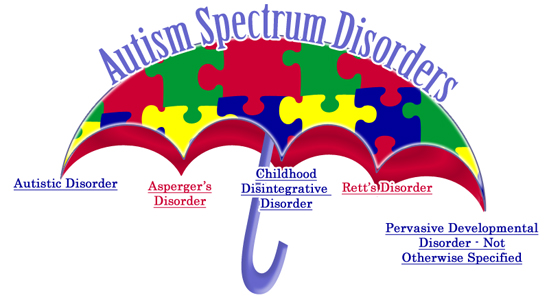
What is a Spectrum?
- Autism is an extreme expression of truly universal characteristics upon which we are all judged
- Restrictive & repetitive behavior, both physical and cognitive
- Ability to express ourselves through language, both verbal and physical
- Ability to maneuver through a complex social environment without stepping on toes or offending others (assuming the mental state of others)
- Fabrication of vaccine-autism study raises ire
- MMR explanation for autism development continues to not be true
Subscribe to:
Posts (Atom)